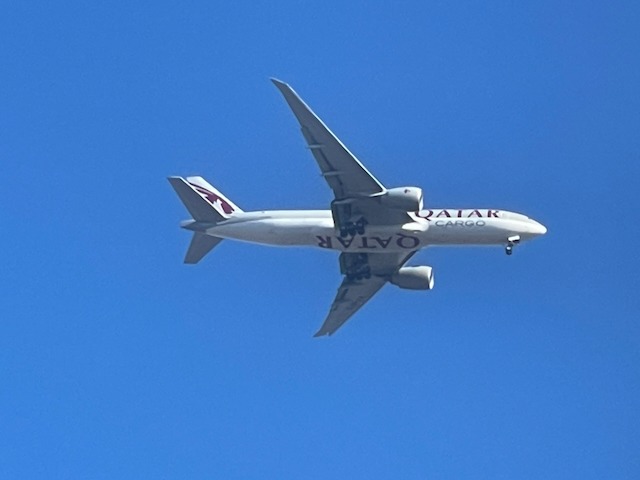
RNP 07 | Sonic Journal
The introduction of the RNP 07 flight paths in northern Brussels transforms residential neighborhoods and mixed-use areas into what Boucsein et al. (2017) call a ‘noise landscape.’ Through field recordings, annotated observations, and small data traces (events, peaks, intervals), I document how the RNP 07 pattern solidifies: silence becomes scarce, interruption the norm. A situated sonic field journal in audio-essay form, art- and data-informed, I trace and interpret how routing changes redefine the conditions of everyday urban environments and lived sonic UX in Brussels North.
March 19, 2026
NEW LIVED SONIC UX
The frequency of descending aircraft follows an approximate four-minute interval, forming sequences that have become an unanticipated phenomenon, subtly rewiring urban living into an infrastructural logic.
This is not mere noise. RNP 07 operates as a vibrational force, propagating through roofs, walls, and windows of domestic spaces. Sleep and everyday life become structured by its ‘rhythmic anarchitecture’ (Goodman, 2009) and the hyper-awareness it imposes.
RNP 07 refers to a GPS-driven Required Navigation Performance (RNP) procedure, enabling aircraft to follow precise, repeatable three-dimensional routes. This system replaces traditional flight paths with predictable, consistent corridors (Eurocontrol, n.d.).
APRIL 08, 2026
ROOFTOP RECORDING

19:30 – 19:39
22° ☼ ༄ 5km/h
40 – 75 dB
APRIL 22, 2026
INTERIOR RECORDING

9:05 - 9:10
8° ☼ ༄ 12km/h ONO
30 - 75 dB (Peak: 81 dB)
Thermic insulation (2021)
Open window / side room
April 29, 2026
INFRASTRUCTURE PLANNING
The implementation of RNP 07 demonstrates how transport infrastructure planning, presented as a technological solution for air navigation efficiency, may concentrate negative externalities in urban areas already marked by deprivation.
The routing of RNP 07 over densely populated inner-city neighborhoods in Brussels installs a time-space configuration that concentrates and intensifies disruptive effects, such as reduced domestic comfort and sleep disruption. Residents of neighborhoods characterized by socio-economic challenges and precarious housing conditions have voiced concerns online about the impact on their daily lives (Free Air Brussels North [collectif citoyen] and Collectif Stop Survol Bxl Nord et RNP 07L, n.d.).
While framed by efficiency, safety, and environmental objectives, the deployment of this technology-driven innovation risks producing unequal socio-spatial effects.
March 14, 2013
MEXICANTOWN

15:24 - 15:30
W VERNOR HWY
DETROIT (US)
JUNE 05, 2026
SONIC IMPACT, Health Risks and Urban Renovation
On Monday, June 8, the Brussels City Council will hear from residents about the lived impact of RNP 07, a GPS-based navigation procedure implemented without prior environmental impact assessment (EIA) or public participation. How will the City of Brussels address the noise-related risks to liveability, quality of life, and public health in neighborhoods undergoing renewal and redevelopment, particularly where housing conditions are already inadequate?
RNP 07, designed to optimize air navigation efficiency, risks interfering with urban renewal ambitions by creating sonic disruptions that impact liveability, quality of life, and health in renewal areas. The European Environment Agency’s 2025 report confirms risks, framing environmental noise as a public health crisis, while WHO guidelines establish thresholds (day/night) for health protection, which are surpassed in Brussels Region. By routing air traffic over densely populated neighborhoods undergoing renewal, including those with housing renovation programs that are not adapted to aircraft noise exposure, a continued use of the current RNP 07 routes risks increasing social and health inequalities and undermining the effectiveness of renewal initiatives.
JUNE 26, 2026
Climate Adaptation: Aesthetics, Acoustic & Thermal Comfort
Living along the Chaussée d’Anvers, at the intersection of historic and more recent urban fabric in the North District of Brussels. Last night, windows open due to high temperatures, aircraft noise nuisance as a direct result of RNP 07 flight route planning.
One of our neighbors, a mother of five young children, lives with her family in a rear house under a flat roof covered with black roofing membrane. Their only outdoor space is a small terrace of half a square meter.
As part of an art-driven research experiment (Claus et al., 2024), last summer I explored with local residents, including our neighbor’s children, the lived experience of acoustic comfort along the Chaussée d’Anvers, with the sidewalk beneath the tree canopies of President Garden as one of the sites.
One of the planning scenarios tested during the project proposes enclosing this green space with taller buildings. The argument combines urban densification with the expectation that a more enclosed street profile could improve acoustic comfort by shielding the garden from traffic noise.
A situated, affective engagement, further developed through art- and data-driven experimental research, led to a rethinking of compact city planning and assessment practices, focusing on how acoustic comfort is experienced along the sidewalk under different scenarios.
The outcome of this work points to how strategies for urban densification and infrastructure planning redistribute environmental effects across socio-spatial contexts in the neighborhood. Current observations during the heatwave extend this distributional logic towards multisensory and atmospheric conditions: aircraft noise nuisance resulting from RNP 07, heat, and urban form are experienced in relation to one another.
As heatwaves become more frequent, climate adaptation calls for aligning thermal stress reduction, housing insulation, nighttime ventilation, and flight route planning such as Brussels Airport’s RNP 07, addressing acoustic and thermal comfort and aesthetic experience in relation to one another.
Sonic urbanism, understood as atmospheric urbanism, considers acoustic comfort in relation to these multisensory atmospheric conditions, positioning them as integral to urban livability and well-being.
Integrating sonic and microclimatic analysis can contribute to understanding how these redistributions are lived across urban contexts and everyday settings.
Bibliography:
Boucsein, B., Christiaanse, K., Kasioumi, E., & Salewski, C. (2017). The noise landscape: A spatial exploration of airports and cities. nai010 uitgevers.
Claus, C., Loupas, G., Kritopoulou, P., & Georgakopoulou, N. (2024). Sonic Drift CDA: Performance of an AI-based sonic geographic dérive. In M. Boubezari, C. R. Duarte, & E. Pinheiro (Eds.), Sensory explorations, ambiances in a changing world: Proceedings of the 5th International Congress on Ambiances (pp. 432–443). International Ambiances Network, Oct 2024, Lisbonne, Portugal. (ISBN: 978-989-757-300-2).
Eurocontrol. (n.d.). Required navigation performance approach (RNP). https://www.eurocontrol.int/product/required-navigation-performance-approach
European Environment Agency. (2025). Environmental noise in Europe: 2025. Publications Office.
Free Air Brussels North (collectif citoyen) & Collectif Stop Survol Bxl Nord et RNP 07L. (n.d.). [Facebook pages].
Goodman, S. (2009). Sonic warfare: Sound, affect, and the ecology of fear. MIT Press.
World Health Organization. (2018). Environmental noise guidelines for the European region. https://www.who.int/europe/publications/i/item/9789289053563
Citation:
Claus, C. (2026). RNP 07 Sonic Journal. https://clauscaroline.be/rnp-07/
© Caroline Claus 2026